Gene prediction using Helixer
Helixer is a deep learning-based gene prediction tool that uses a convolutional neural network (CNN) to predict genes in eukaryotic genomes. Helixer is trained on a wide range of eukaryotic genomes and can predict genes in both plant and animal genomes. Helixer can predict genes without any extrinsic information such as RNA-seq data or homology information, purely based on the sequence of the genome.
1. Installation
Helixer is available as a Singularity container. You can pull the container using the following command:
This will create helixer_v0.3.3_cuda_11.8.0-cudnn8.sif file in the current directory. We will rename this file to helixer.sif for simplicity.
2. Downloading trained models
Helixer requires a trained model to predict genes. With the included script fetch_helixer_models.py you can download models for specific lineages. Currently, models are available for the following lineages:
land_plantvertebrateinvertibratefungi
There are instructions to train your own models as well as fine tune the existing models using the RNAseq data for the species of interest. But for this tutorial, we will just use the pre-trained models.
This will download all lineage models in the models directory. You can also download models for specific lineages using the --lineage option.
The files downloaded will be in the following structure:
3. Running Helixer
Helixer requires GPU for prediction. For running Helixer, you need to request a GPU node. You will also need the genome sequence in fasta format. For this tutorial, we will use Maize genome (Zea mays subsp. mays), and use the land_plant model to predict genes.
Download the genome sequence:
Run Helixer:
Note
In A100 GPU nodes, the run time for predicting genes in Maize genome takes around 3.5 hours (03:36:23), with 6 CPUs --ntasks-per-node=6. The memory usage was 7.98 GB.
The GFF format output had 41,923 genes predicted using Helixer. You can view the various features in the gff file using the following command:
outputs:
Warning
As you may have noticed, the number of mRNA and gene features are the same. This is because isoforms aren't predicted by Helixer and you only have one transcript per gene. Exons are identified with high confidence and alternative isoforms are usually collapsed into a single gene model.
4. Comparing and benchmarking
We will download the reference annotations for Maize genome from MaizeGDB and compare the predicted genes with the reference annotations.
Processing GFF output
The output generated by Helixer is in GFF format. However we might have to format it further to make it compatible with our processing workflow. Here are the steps to process the GFF output:
A. BUSCO profiling
We will use BUSCO to profile the predicted genes and reference annotations.
We will also do this on the original reference annotations as well as the genome sequence.
Reference genome:
Reference annotations:
Once the BUSCO profiling is done, the results can be compared.
Table 1: BUSCO results
| Category | Helixer | B73.v5 (MaizeGDB) | B73.v5 (Reference) |
|---|---|---|---|
| Complete BUSCOs | 4,808 (98.2%) | 4,729 (96.6%) | 4,807 (98.2%) |
| Single-Copy BUSCOs | 4,053 (82.8%) | 2,123 (43.4%) | 4,053 (82.8%) |
| Duplicated BUSCOs | 755 (15.4%) | 2606 (53.2%) | 754 (15.4%) |
| Fragmented BUSCOs | 34 (0.7%) | 39 (0.8%) | 10 (0.2%) |
| Missing BUSCOs | 54 (1.1%) | 128 (2.6%) | 79 (1.6%) |
| Total BUSCOs | 4,896 | 4,896 | 4,896 |
or visualized as a stacked bar plot:
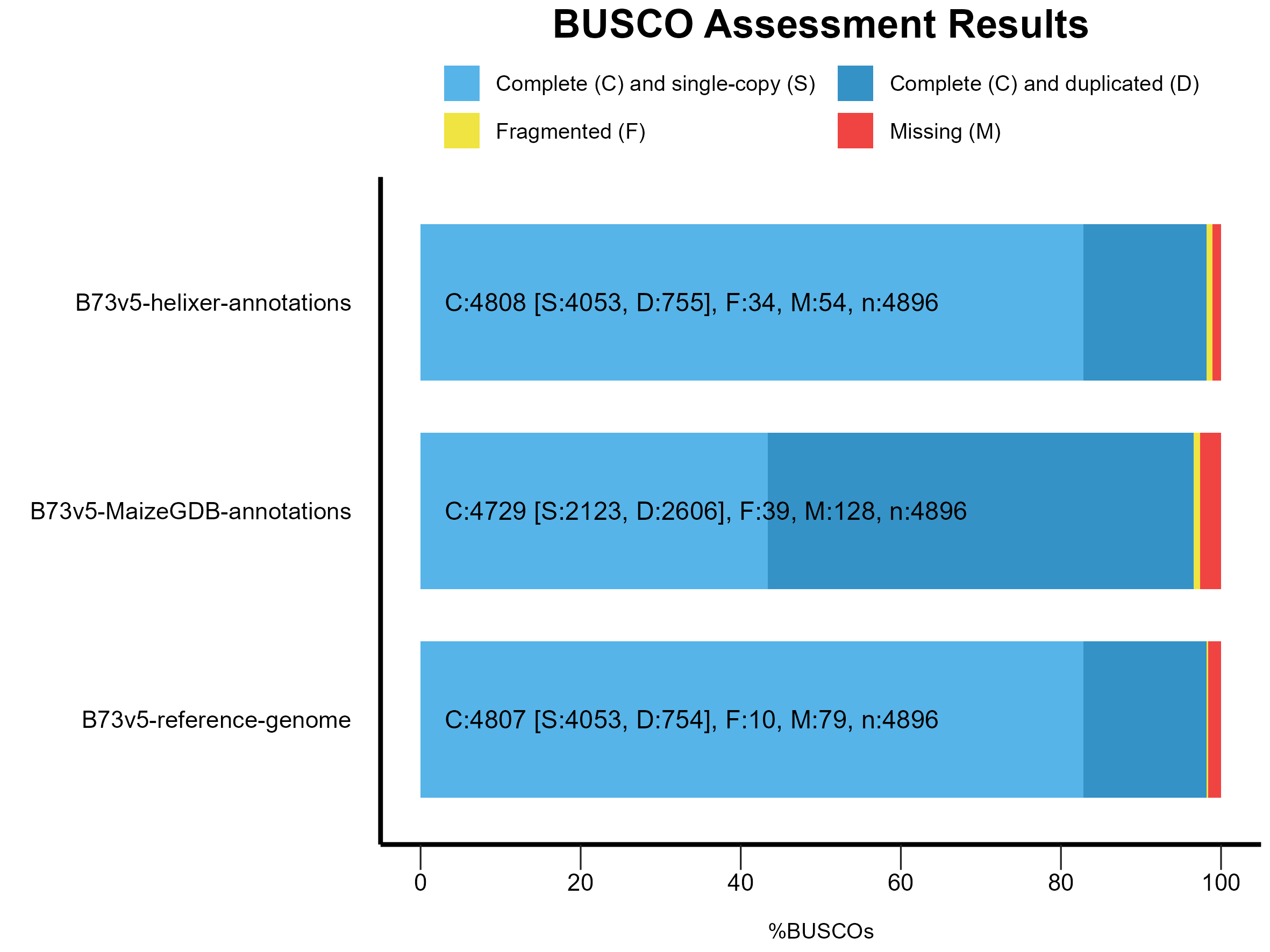
Figure 1: BUSCO results for Helixer, B73.v5 (MaizeGDB) and B73.v5 (Reference) annotations.
Note
The Helixer predictions shows higher number of complete BUSCOs (single-copy + duplicated) than current B73.v5 annotations available at MaizeGDB. It also reports only 54 missing BUSCOs, lowest among all 3 BUSCO results meaning it was able to recover more BUSCO genes than what BUSCO software could predict/recover using AUGUSTUS/tblastn search!
Warning
The duplicated genes in B73.v5 (MaizeGDB) should not be interpreted as paralogs. Since we did not use just primary transcripts for running BUSCO, the alternative isoforms of the same gene are reported as "duplicated".
B. Comparing annotations
We will use mikado to compare the annotations. Mikado is a tool to compare and merge gene annotations. We will use the mikado compare command to compare the annotations. We will filter V5 annotations to only include primary transcripts and only compare protein coding genes.
The output will be in the ref_NAM.B73v5-vs-prediction_HELIXERv1_compared directory. The summary.tsv file will have the comparison results.
Table 2: Mikado comparison results
| Comparison Level | Sensitivity (Sn) | Precision (Pr) | F1 Score |
|---|---|---|---|
| Base level | 81.90% | 75.29% | 78.46% |
| Exon level (stringent) | 53.21% | 42.82% | 47.46% |
| Exon level (lenient) | 75.93% | 61.02% | 67.66% |
| Splice site level | 85.06% | 65.89% | 74.26% |
| Intron level | 78.45% | 60.77% | 68.49% |
| Intron chain level (stringent) | 38.10% | 32.85% | 35.28% |
| Transcript level (>=80% base F1) | 36.89% | 34.98% | 35.91% |
| Gene level (>=80% base F1) | 36.89% | 34.98% | 35.91% |
Note
When compared against each other, the Helixer predictions, at base level, matches the B73.v5 (maizeGDB annotations) really well. However, the precision is lower for Helixer predictions, likely because there are higher number of novel genes predicted in Helixer that are non existant in B73.v5 annotations.
Table 3: Summary of comparison
| Feature | Total Count | Missed Count (%) | Novel Count (%) |
|---|---|---|---|
| Transcripts | 39,756 | 7,539 (18.96%) | 8,306 (19.81%) |
| Genes | 39,756 | 7,539 (18.96%) | 8,306 (19.81%) |
Note
The Helixer predictions missed 7,359 predictions (out of 39,756) that were in B73.v5, but also predicted 8,306 novel transcripts. Since Helixer does not predict isoforms, the number of genes and transcripts are the same.
C. Feature assignment
B73 has extensive expression data and this can be used to evaluate the gene predictions. If the annotations are accurate, more RNA-seq reads will align within the predicted features, making a higher proportion of assigned reads an indicator of annotation accuracy. Similarly, higher proportions of unassigned reads indicate potential inaccuracies in the annotations, suggesting that important features may be missing or incorrectly predicted.
Expression data for B73 was downloaded from MaizeGDB (as BAM files) and feature assignment was done using featureCounts from the subread package (both NAM.v5 and Helixer predictions).
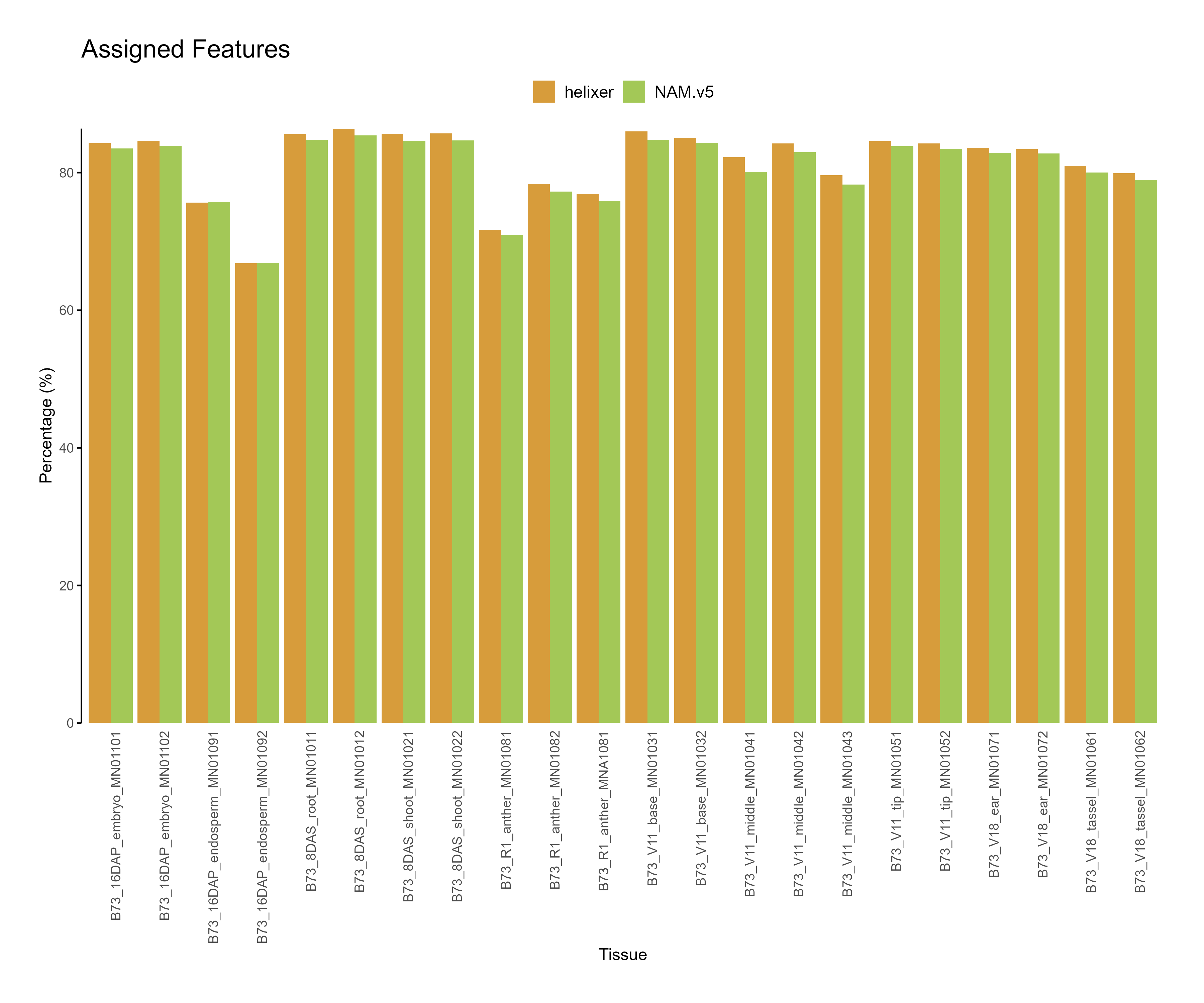
Figure 2: Feature assignment for B73.v5 and Helixer predictions. The reads assigned to helixer features are higher across tissues as compared to NAM.v5 annotations.
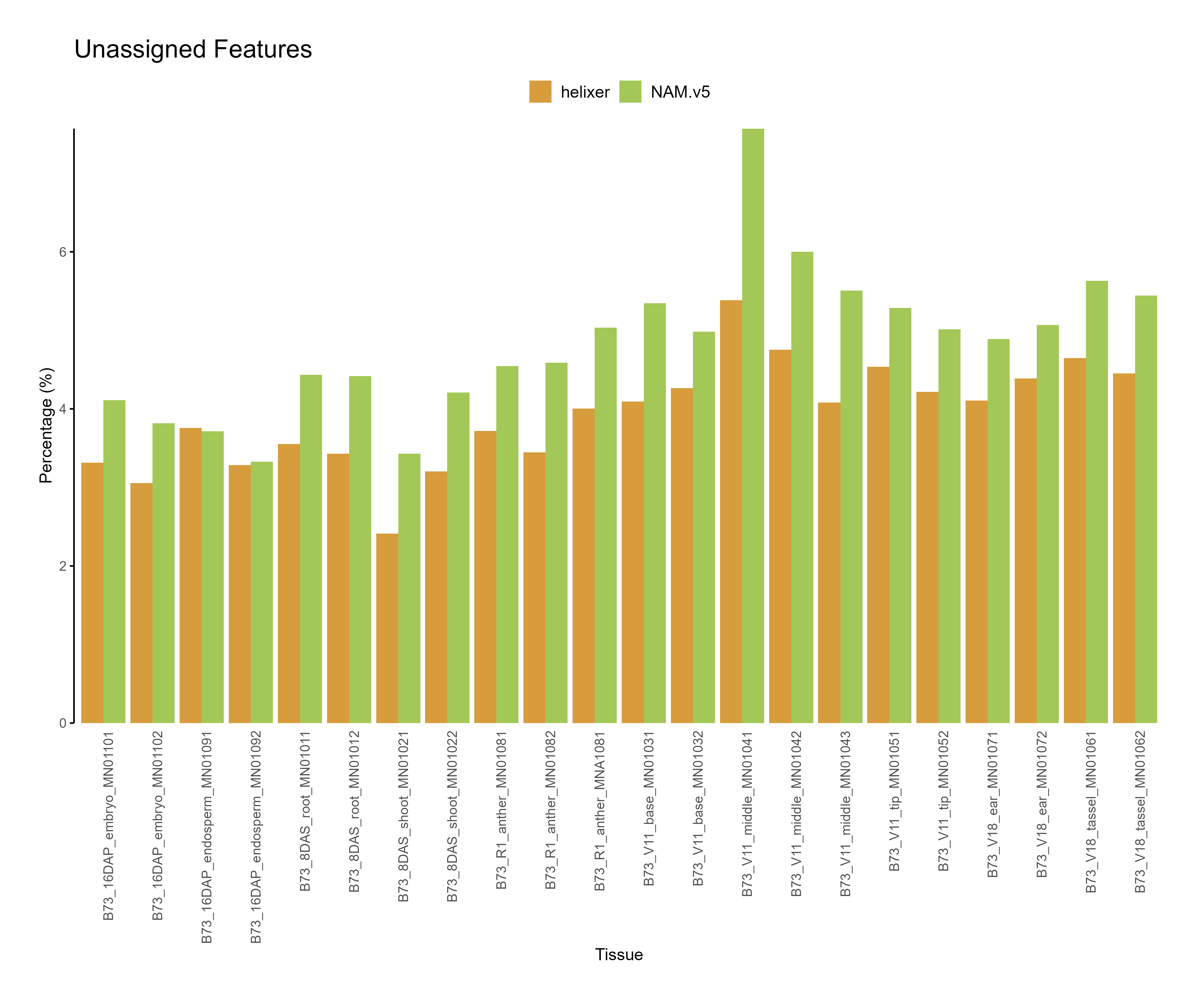
Figure 3: Feature assignment for B73.v5 and Helixer predictions. The unassigned reads are higher for NAM.v5 annotations across tissues.
The code used for parsing featureCounts summary files and generating the plots can be found here: parse_subreads.R
Note
The slightly higher assignment rate for Helixer predictions suggests that the predictions are capturing more coding regions of the genome. Similarly, lower unassigned reads indicate Helixer predictions have better accuracy than current annotations. For differential gene expression studies, higher assignment rates are desirable as they indicate more accurate gene models.
D. Functional annotation
The Eukaryotic Non-Model Transcriptome Annotation Pipeline (EnTAP) can be used for functional annotation of the predicted genes. We will use the entap pipeline determine proportion of genes with functional annotations in each predictions.
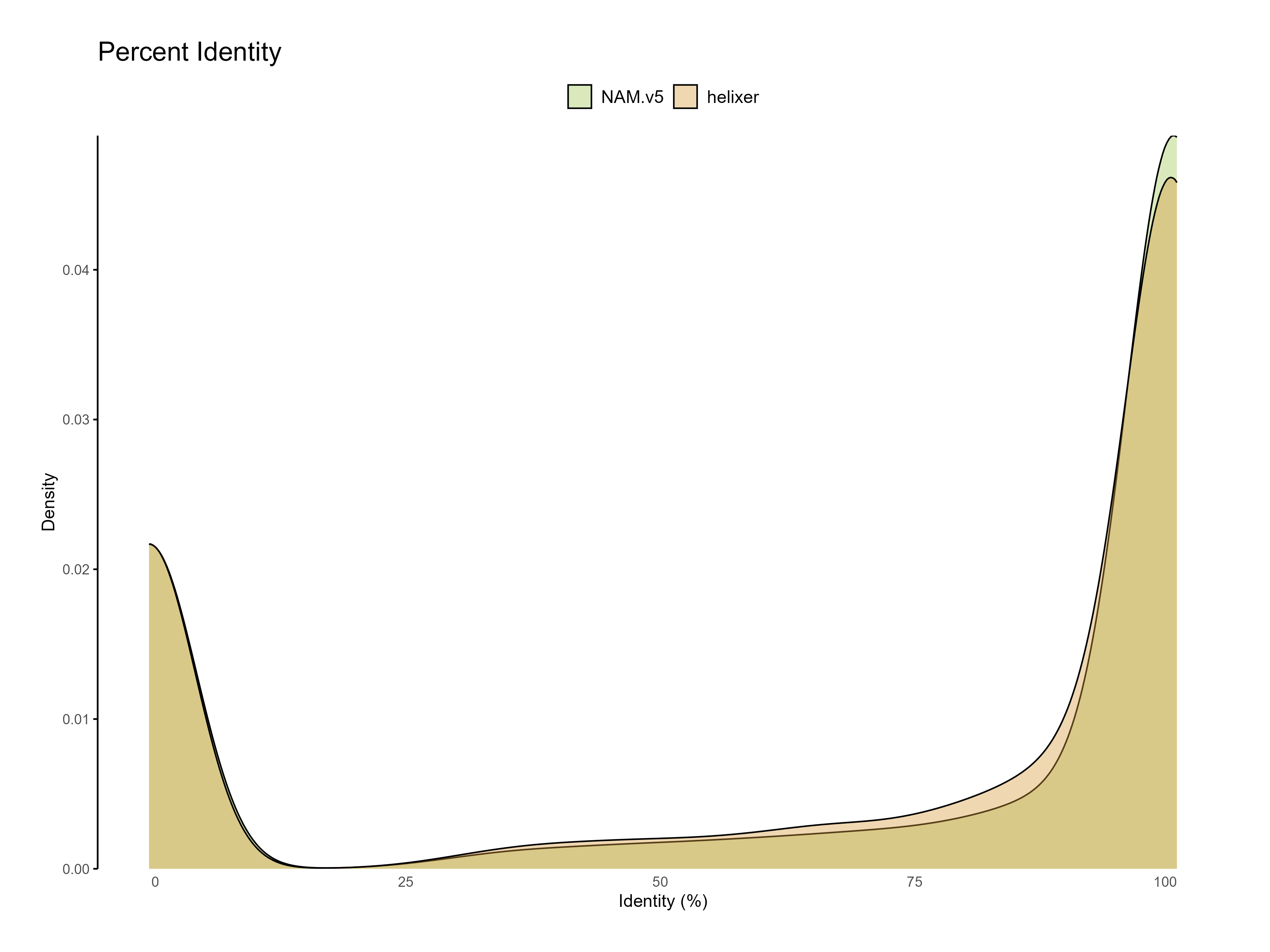
Figure 4: Percent identity of each predicted gene to the reference databases sequences (one hit per query).
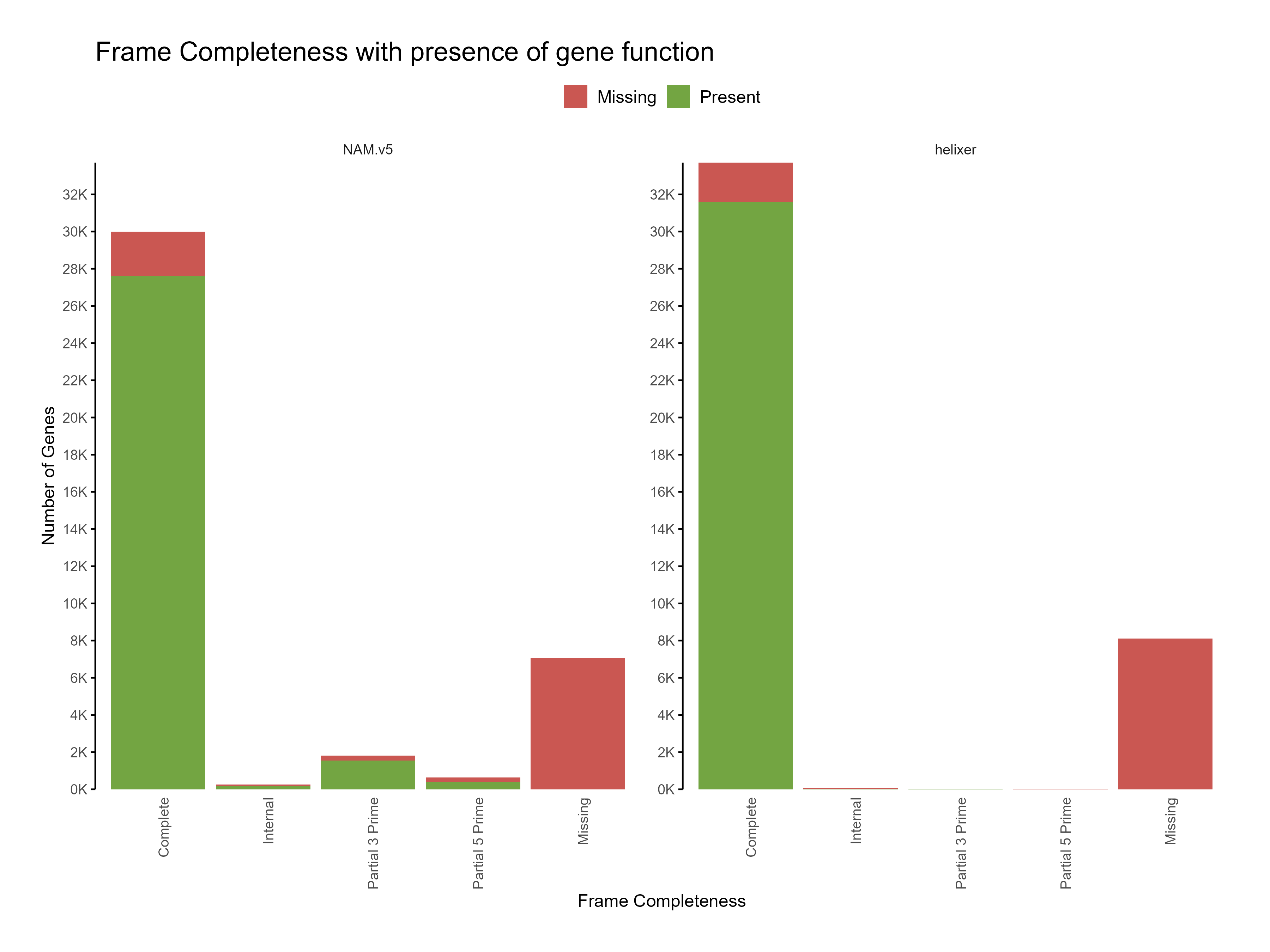
Figure 5: Distribution of frame completeness with presence of gene function across predictions
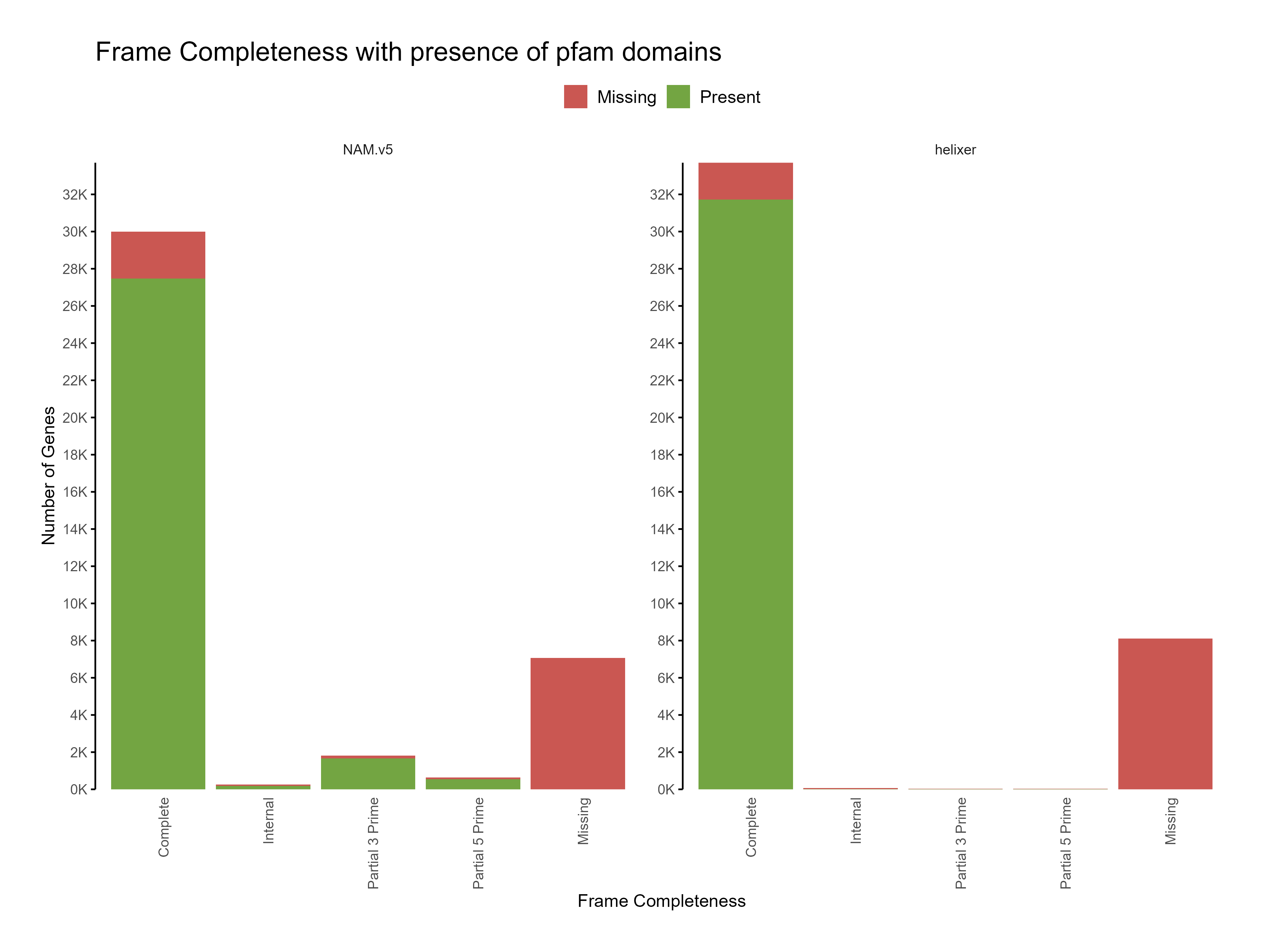
Figure 5: Distribution of frame completeness with presence of pfam domains across predictions
The code used for parsing EnTAP's entap_results.tsv files and generating the plots can be found here: parse_subreads.R
Note
The functional annotation results show that the Helixer predictions have higher proportion of genes with functional annotations compared to the reference annotations. Predictions with similarity to existing sequences in the databases are likely to be more accurate than those without any similarity.
E. Phylostrata analysis
Phylostrata analysis can be used to determine the evolutionary age of the predicted genes. We will use the phylostrata package to determine the phylostrata of the predicted genes.
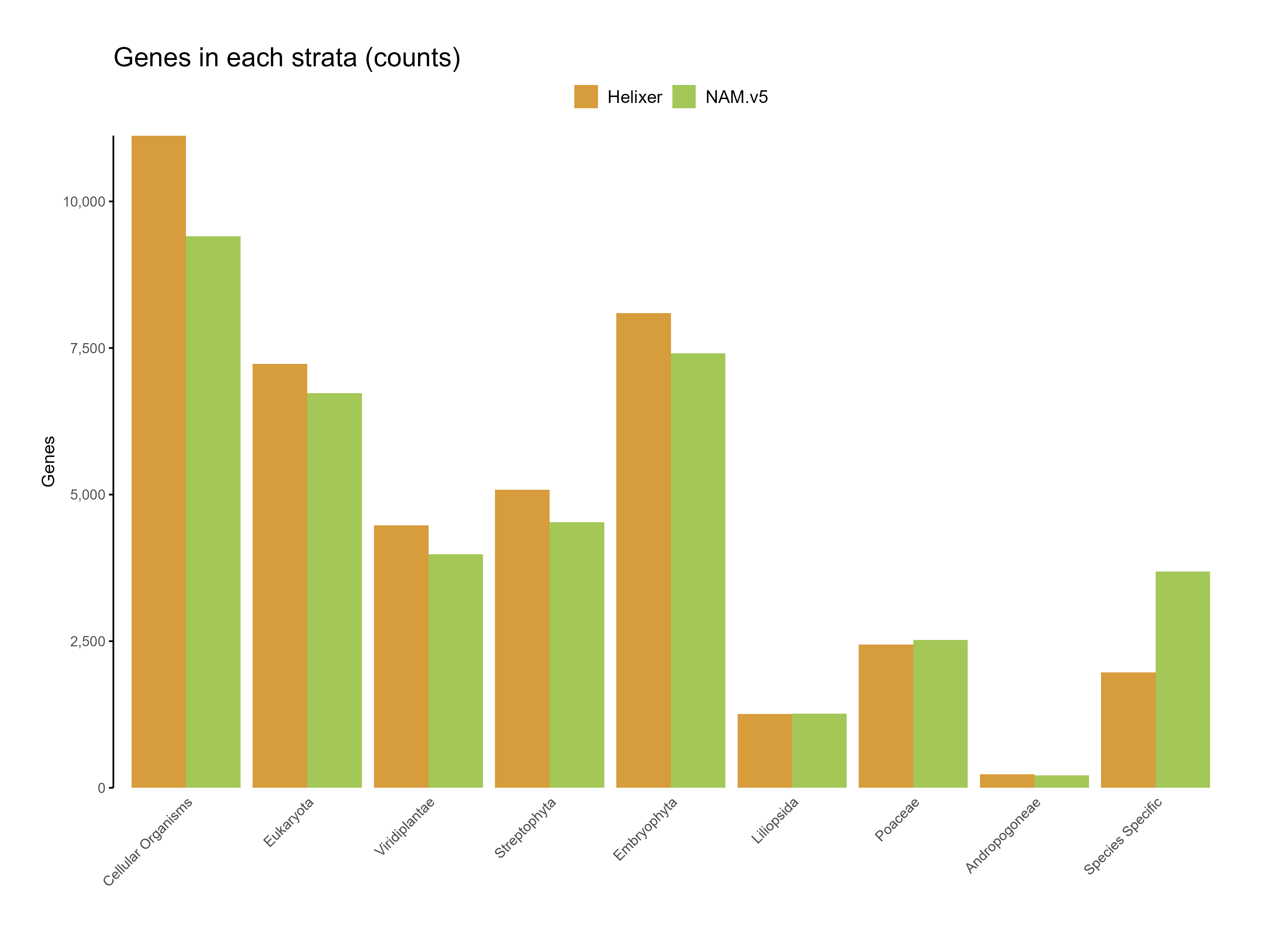
Figure 6: Genes in each strata for the predictions (count)
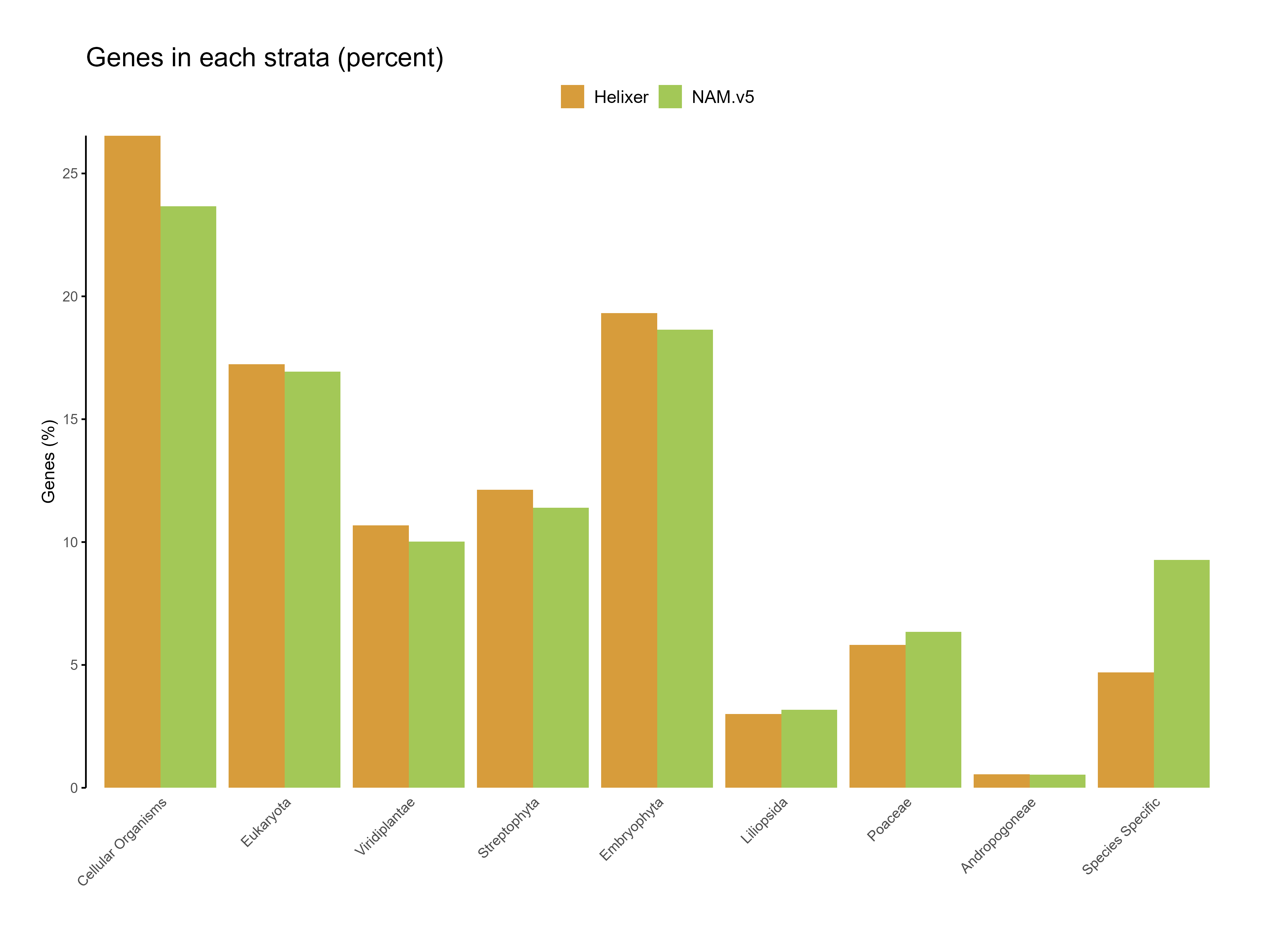
Figure 7: Genes in each strata for the predictions (percent)
The code used for parsing phylostrata analyses (phylostrata_run.R) and for plotting results (phylostrata_plot.R) are provided in the repository.
Note
The higher proportion of genes in deeply conserved phylostrata (e.g., cellular organisms and eukaryota) underscores Helixer's strength in accurately identifying core, evolutionarily conserved genes. This alignment with conserved regions can be interpreted as strong evidence of the model's reliability in identifying well-established gene structures.
Warning
Limitations in Novel Gene Identification: The relatively low representation in species-specific phylostrata suggests that Helixer may struggle with genes that are unique or novel to a particular species. This could be due to the lack of specific training data for these novel genes or the limitations of the model in detecting sequences that deviate from conserved gene structures.
F. GFF3 stats comparison
You can generate comprehensive statistics for the GFF3 files using the agat_sp_statistics.pl script from the agat package.
The statistics can be compared to identify differences in the gene predictions.
G. OMArk proteome assessment
OMArk provides measures of proteome completeness, characterizes the consistency of all protein coding genes with regard to their homologs, and identifies the presence of contamination from other species
Table 4: Conserved HOGs analysis for completeness assessment of gene sets in Helixer and NAM.v5 This table provides a completeness assessment of the gene sets for both Helixer and NAM.v5 based on conserved Hierarchical Orthologous Groups (HOGs) within the Panicoideae clade. The categories include the number of single-copy genes, duplicated genes, and missing genes, with a distinction between expected and unexpected duplications. The assessment serves as a proxy for evaluating the gene repertoire completeness and duplication events in each dataset.
| Category | Helixer Count | Helixer (%) | NAM.v5 Count | NAM.v5 (%) |
|---|---|---|---|---|
| Single | 13,072 | 63.75% | 9,150 | 44.62% |
| Duplicated | 5,874 | 28.65% | 2,240 | 10.92% |
| Duplicated, Unexpected | 2,150 | 10.49% | 990 | 4.83% |
| Duplicated, Expected | 3,724 | 18.16% | 1,250 | 6.10% |
| Missing | 1,559 | 7.60% | 9,115 | 44.45% |
| Total HOGs | 20,505 | 100.00% | 20,505 | 100.00% |
Table 5: Consistency assessment of annotated protein-coding genes in Helixer and NAM.v5 proteomes. This table presents the consistency assessment of annotated protein-coding genes within the Helixer and NAM.v5 proteomes. The categories evaluate gene placements as "Consistent" with the ancestral lineage, "Inconsistent" (potential misannotations), "Contaminants" (genes from other lineages), and "Unknown" (unmatched genes). Subcategories include partial hits and fragmented proteins, which may indicate issues with gene models, annotation, or sequence integrity.
| Category | Helixer Count | Helixer (%) | NAM.v5 Count | NAM.v5 (%) |
|---|---|---|---|---|
| Total Proteins | 41,923 | 100.00% | 39,756 | 100.00% |
| Consistent | 38,997 | 93.02% | 20,208 | 50.83% |
| Consistent, partial hits | 5,412 | 12.91% | 3,541 | 8.91% |
| Consistent, fragmented | 3,094 | 7.38% | 2,627 | 6.61% |
| Inconsistent | 757 | 1.81% | 1,910 | 4.80% |
| Inconsistent, partial hits | 291 | 0.69% | 335 | 0.84% |
| Inconsistent, fragmented | 279 | 0.67% | 921 | 2.32% |
| Contaminants | 0 | 0.00% | 0 | 0.00% |
| Contaminants, partial hits | 0 | 0.00% | 0 | 0.00% |
| Contaminants, fragmented | 0 | 0.00% | 0 | 0.00% |
| Unknown | 2,169 | 5.17% | 17,638 | 44.37% |
H. CDS assessments (GC, length, start/stop)
We can use bioawk get relevant stats on the CDS sequences predicted by Helixer and compare them with the reference annotations.
The plots were generated using the following R script: cds_assesment.R
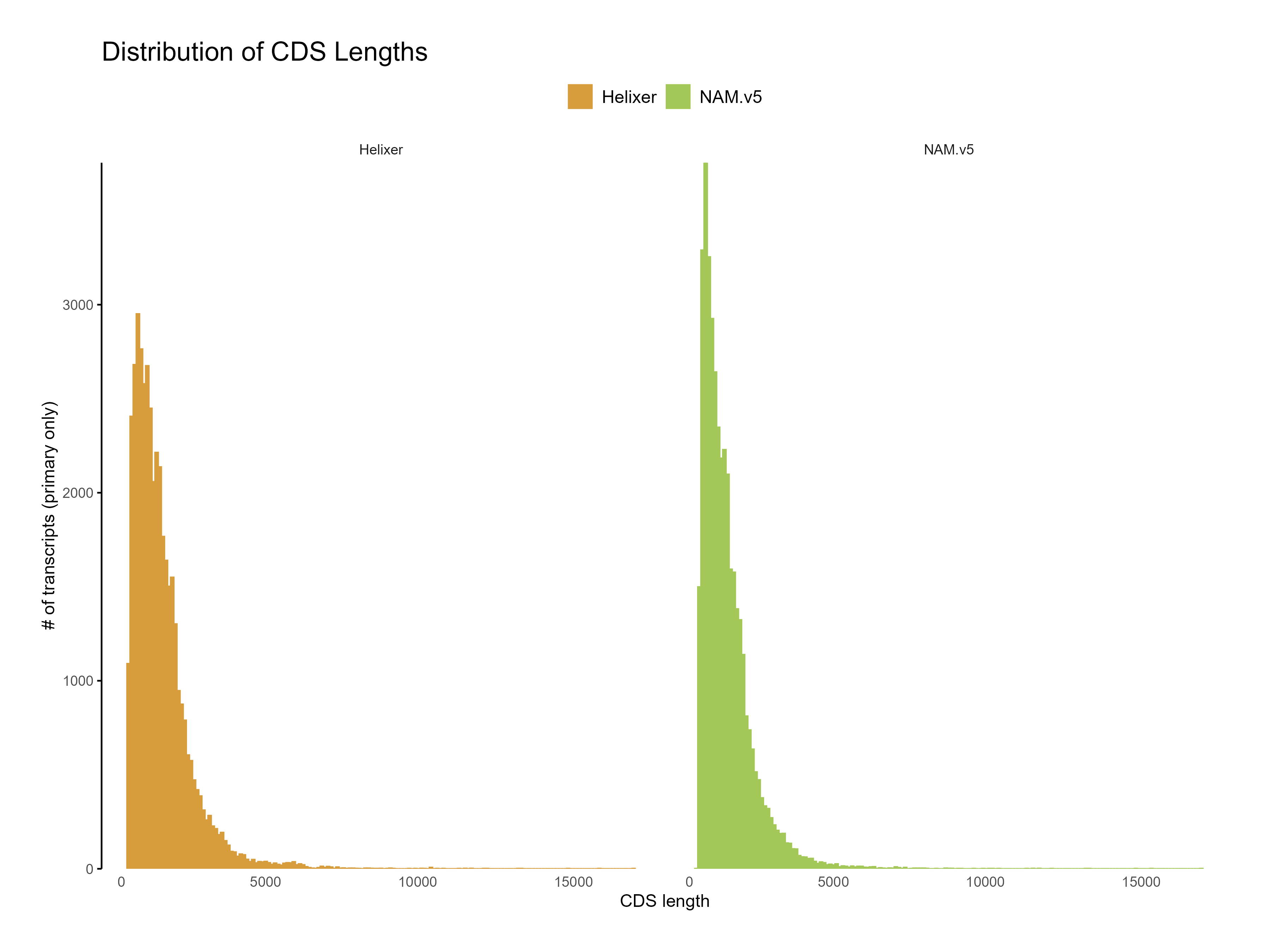
Figure 8: Distribution of CDS length for Helixer and NAM.v5 predictions. The Helixer predictions have a lower proportion of shorter CDS lengths compared to NAM.v5 annotations.
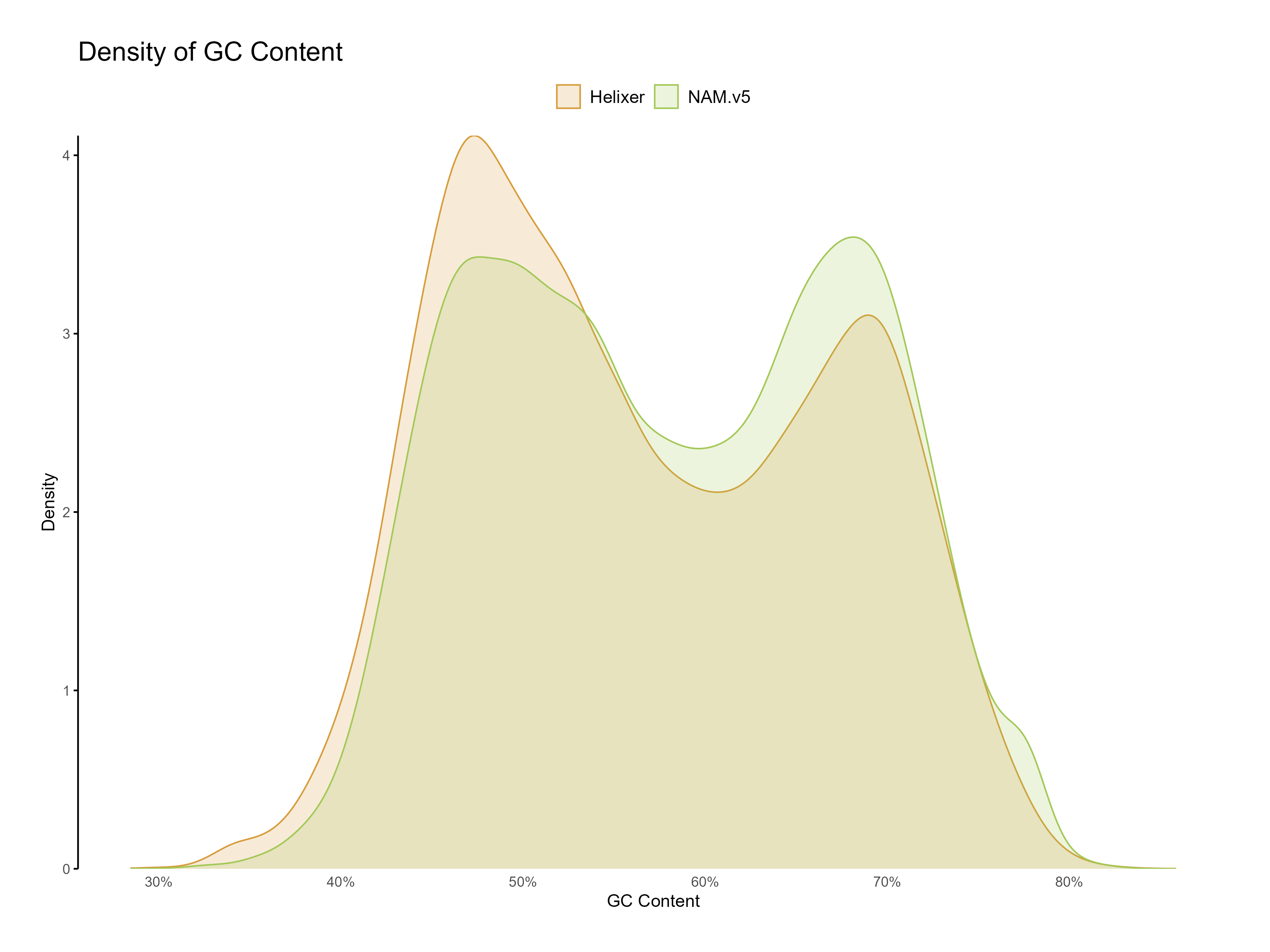
Figure 9: Distribution of GC content for Helixer and NAM.v5 predictions. Both predictions have a classic dual GC peak typical to grasses.
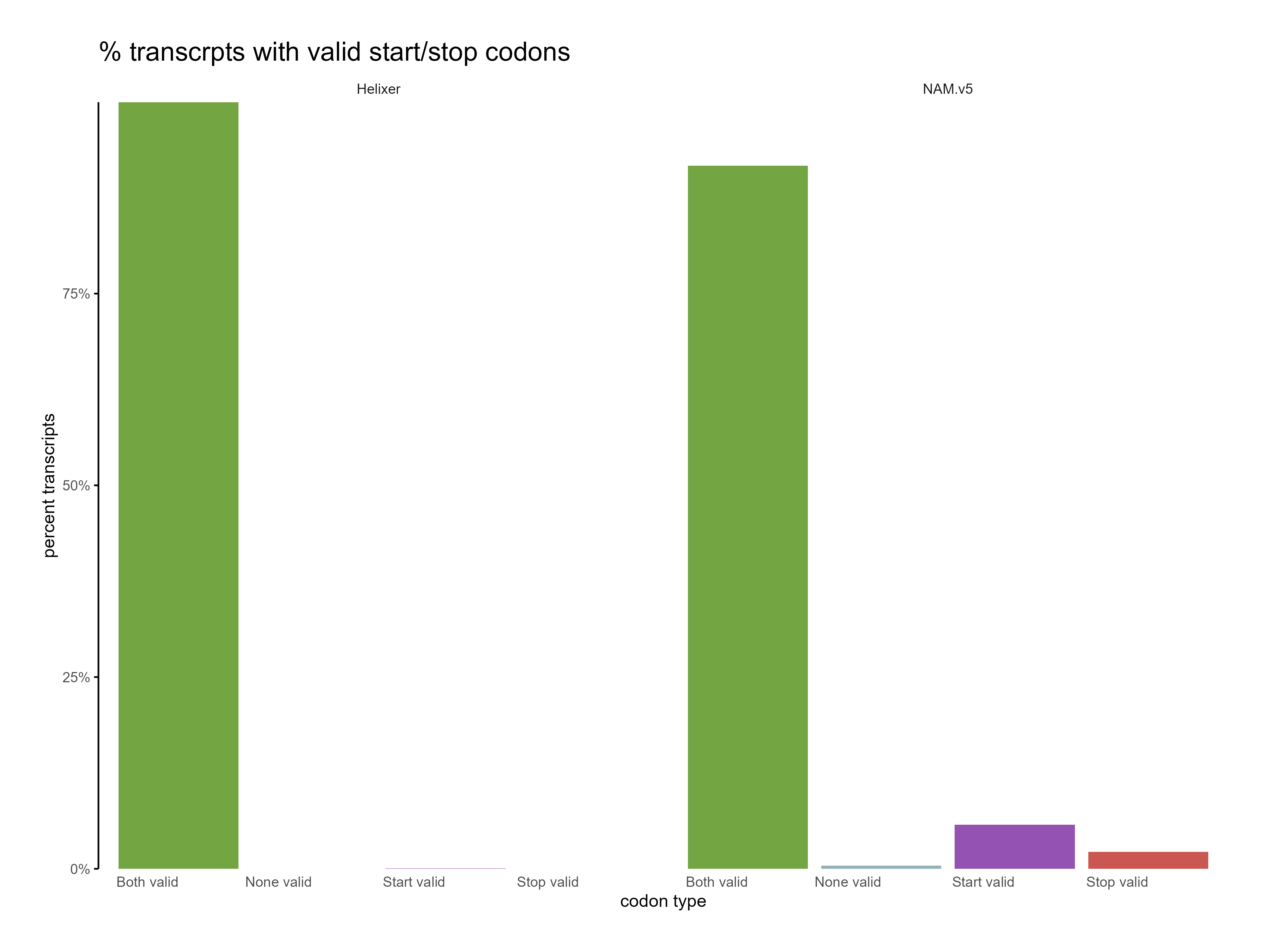
Figure 10: Distribution of start and stop codons for Helixer and NAM.v5 predictions. The Helixer predictions have a higher proportion of valid start and stop codons.
Key Points
-
Helixer's strength in conserved genes: Helixer effectively predicts genes in deeply conserved phylostrata, indicating strong performance in identifying core, evolutionarily stable genes across eukaryotic lineages.
-
Limited novel gene detection: Helixer shows lower accuracy in detecting species-specific genes, suggesting that identifying novel or rapidly evolving genes may not be its primary strength.
-
Pre-trained models for versatile Use: With pre-trained models for various lineages (plants, animals, fungi), Helixer is accessible for multiple research applications without requiring additional RNA-seq or homology data.
-
Simplicity of Gene Prediction: Helixer allows for rapid and straightforward gene prediction with a single command, requiring no external data or repeat masking. It can predict genes in complex, highly repetitive genomes like maize in under four hours. This simplicity, combined with easy installation, has the potential to revolutionize gene prediction workflows.
-
Ideal for Comparative Genomics: Helixer's robust detection of conserved genes makes it a valuable tool for studies focused on comparative genomics and understanding fundamental gene functions.
-
Potential for Improvement: The presence of unassigned reads across samples and limited species-specific gene detection highlight areas for future model refinement, possibly with custom training for novel species.
Warning
Helixer requires GPU for prediction to run efficiently. The prediction time can vary based on the size of the genome and the complexity of the gene structures.
5. References
- Helixer GitHub
-
Holst F, Bolger A, Gunther C, Mass J, Kindel F, Triesch S, Kiel N, Saadat N, Ebenhoh O, Usadel B,Schwacke R, Bolger M, Weber APM, Denton AK Helixer - de novo prediction of primary eukaryotic gene models combining deep learning and a Hidden Markov Model. bioRxiv. 2023 Feb 06: 2023.02.06.527280. Preprint. (not been certified by peer review)
-
Stiehler F, Steinborn M, Scholz S, Dey D, Weber APM, Denton AK Helixer: cross-species gene annotation of large eukaryotic genomes using deep learning. Bioinformatics. 2020 Dec, 36(22-23): 5291-5298.